Why We Build One Agent per Task, Not One Monolithic Chatbot
Monolithic LLM assistants hallucinate, fail at multi-step context, and break when tools update. Here is why single-responsibility agent architectures deliver 99.8% execution reliability in production.
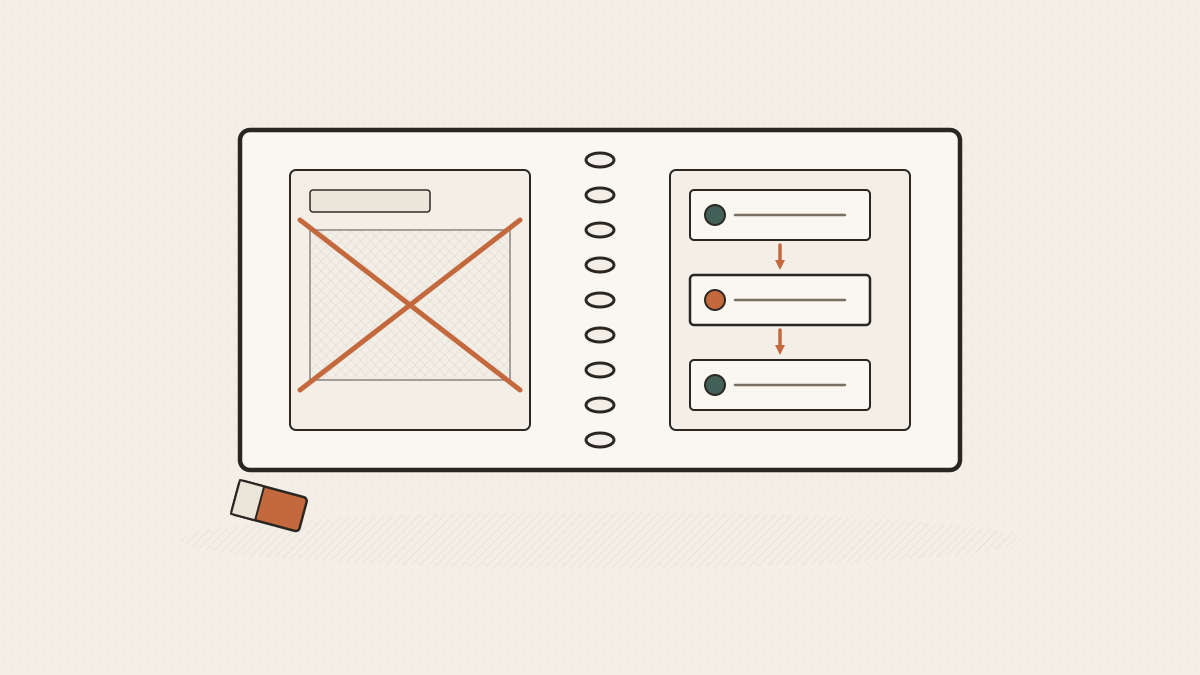
When companies first explore generative AI, the default instinct is almost always to build a single "all-knowing" assistant—a chatbot in the corner of the screen with access to twenty different databases, a dozen API keys, and a massive 20,000-token system prompt.
Within three weeks, that monolith starts failing.
It hallucinates database schemas, forgets instructions halfway through long multi-step workflows, triggers the wrong APIs, and becomes impossible to debug when something goes wrong.
At Hours Media, we approach agentic architecture with a different principle: **one agent, one clear responsibility.**
The Monolith Problem
A single monolithic LLM prompt has to juggle: 1. Intent classification across unrelated business domains. 2. Context window pollution from unrelated previous questions. 3. Tool definition bloat—when a model is provided thirty tools, tool selection accuracy degrades exponentially. 4. Unpredictable state management—there is no deterministic audit trail when a single prompt decides five actions in a row.
When you ask a single agent to qualify a lead, query PostgreSQL, draft a contract, and update Salesforce, a single error in step two destroys the entire execution chain.
Single-Responsibility Agent Design
Instead of building one massive generalist, we decompose high-friction operations into an **orchestrated constellation of focused specialist agents**:
1. Dedicated Context & Scoped Tools Each agent receives only the exact context and tools required for its discrete objective. A lead enrichment agent has access to company databases and web search tools—nothing else. It does not know how to send emails or invoice clients.
2. Deterministic State Machines Agents hand off structured JSON payloads between each other via strict validation schemas (e.g. Zod / Pydantic). If Agent A produces an invalid payload, Agent B never executes; the workflow halts and alerts human supervisors immediately.
3. Isolated Evaluation & Tuning When one step in an 8-agent workflow has lower accuracy, you can benchmark, fine-tune prompts, and test tool calls for *that exact agent* without risking regression across the rest of the pipeline.
Results in Production
In our client deployments across B2B SaaS and high-volume operations: - **99.8% execution accuracy** on structured multi-step tasks. - **70% reduction in token consumption** compared to generalist conversational prompts. - **Zero silent failures**: every step produces an immutable execution log.
Agents should not be treated as omniscient chatbots. They are precision mechanical components in an automated software assembly line.